
Whether your back pain is from a herniated disc, muscle strain, spinal misalignment, or years of chronic stress, Dr. Steven Enriquez has helped Tempe patients recover for over 20 years without surgery, injections, or dependence on pain medication.
Call (480) 491-7241Back pain affects nearly every American at some point in life. It's the #1 cause of disability in the United States, the #2 reason people visit a doctor, and one of the top drivers of missed workdays and reduced quality of life. But here's what most patients don't realize: the vast majority of back pain cases respond well to conservative, non-surgical care — especially when the underlying cause is identified early.
At Global Chiropractic in Tempe, Dr. Steven Enriquez takes the time to diagnose the actual source of your back pain, then builds a targeted treatment plan around it. Most patients see meaningful improvement within just a few weeks of care.
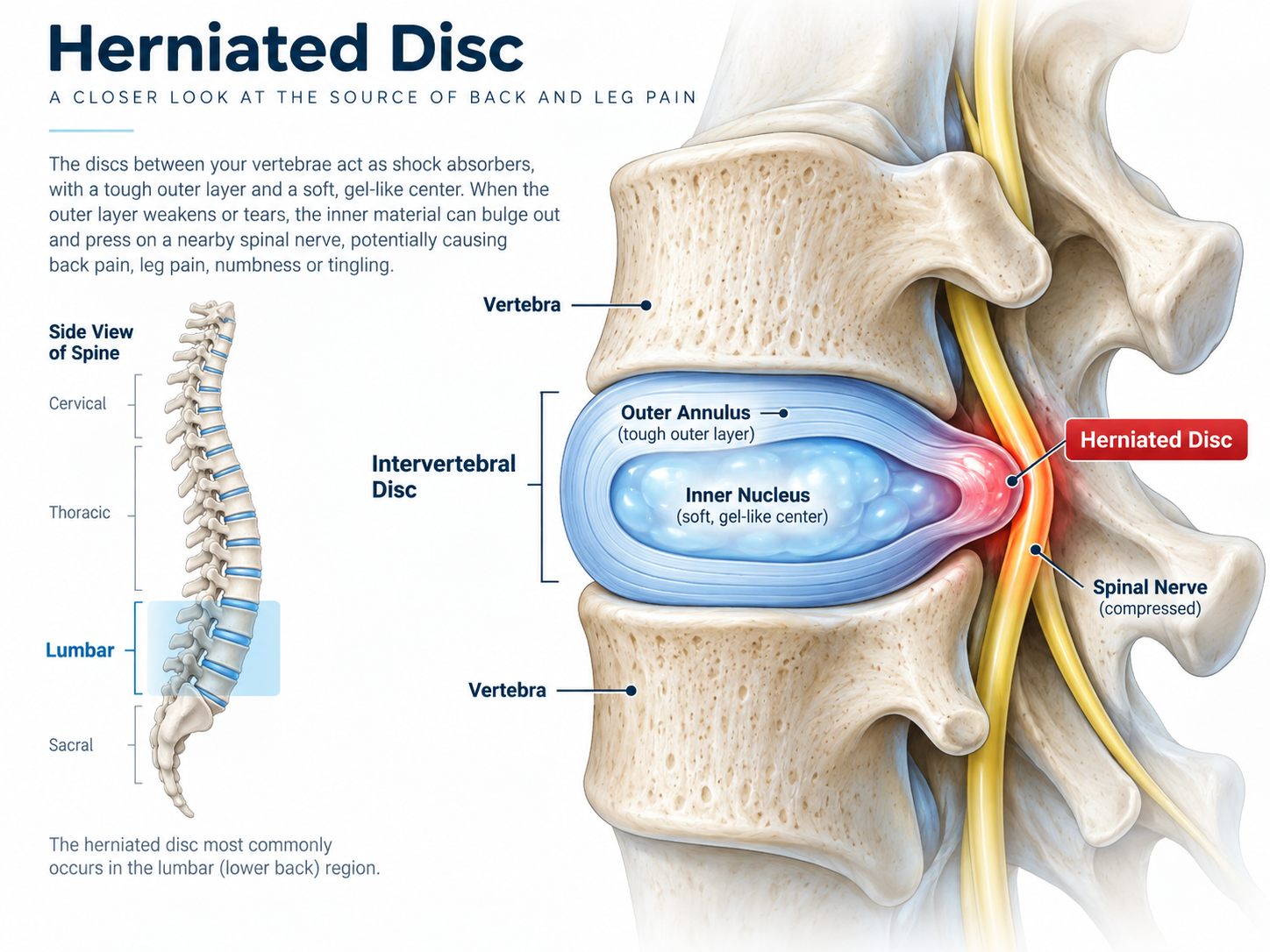
Your spine is a stack of vertebrae separated by discs that act as shock absorbers. Each disc has a tough outer layer and a soft, gel-like center. When the outer layer weakens or tears, that inner material can bulge out and press against a spinal nerve — one of the most common and painful causes of back pain.
The lumbar (lower) spine takes the most mechanical stress in daily life. It supports your body weight, absorbs impact when you walk or run, and bears the load every time you lift, bend, or twist. That's why the lumbar region is where most back injuries and herniated discs occur.
Understanding your spine's structure matters because the correct diagnosis is the foundation of effective treatment. A herniated disc, a muscle strain, and a spinal misalignment can all cause similar back pain — but they respond to very different treatment approaches.
Back pain has dozens of possible sources, and identifying the right one is what separates lasting relief from temporary symptom management. These are the most common causes we diagnose and treat at Global Chiropractic:
One of the most common and painful causes. Interestingly, MRI studies show that up to 37% of adults have disc bulges without any symptoms — pain depends on whether the disc is compressing a nerve.
Spinal vertebrae shifted out of proper position. One of the most commonly overlooked causes of chronic back pain. Correction requires trained hands — this is the core of chiropractic care.
Often the result of lifting too heavy, twisting under load, or sudden movements. Typically causes localized pain, swelling, and stiffness that responds well to conservative care.
Prolonged stress causes physical changes: elevated cortisol, muscle tension, decreased bone density, and painful trigger points. Frequently a hidden driver of persistent back pain.
Long hours at a desk, sleeping in a bad position, or repetitive motions gradually pull the spine out of alignment and overwork specific muscle groups.
Natural wear on the cartilage between vertebrae. Causes stiffness, reduced range of motion, and deep aching pain — especially in the mornings or after prolonged sitting.
Even low-speed collisions can misalign the spine, tear ligaments, or trigger disc issues. Symptoms sometimes appear days or weeks after the event.
Manual labor, heavy lifting, athletic overuse, and workplace falls are common causes of both acute back injury and chronic recurring pain.
One of the most useful things you can learn about your own back pain is the difference between a muscle-based injury and a disc-based injury. They can feel similar at first, but they respond to very different care. Here's how the two typically compare:
| Feature | Muscle Strain | Herniated Disc |
|---|---|---|
| Type of Pain | Dull, aching, throbbing | Sharp, shooting, burning |
| Location | Stays localized in the back | Radiates into buttocks, leg, or foot |
| Movement | Hurts when moving, better with rest | Worse when sitting, coughing, or sneezing |
| Numbness / Tingling | Rarely present | Common — often in leg or foot |
| Weakness | None | Possible in one leg |
| Typical Recovery | Days to 2 weeks with proper care | Weeks to months |
A proper physical examination, orthopedic testing, and (when needed) imaging is the reliable way to know which you're dealing with. Self-diagnosis often leads to the wrong care.
Here's the analogy we use to explain how disc herniations happen. Think of each spinal disc as a jelly doughnut. The outer ring is tough and fibrous — like the doughnut's dough — and the inner core is soft and gel-like — like the jelly.
Over time, wear and tear or sudden trauma can weaken the outer ring. When that happens, the "jelly" inside can bulge out or leak through the tear, pressing on nearby nerves. The result: sharp, radiating pain that shoots down the leg, often with numbness, tingling, or weakness.
Not every disc herniation causes pain. In fact, MRI studies show that up to 37% of adults have disc bulges with no symptoms at all. Pain depends heavily on whether the leaked material is contacting a nerve and how much inflammation surrounds the area. That's why the same imaging finding can mean vastly different things in different patients — and why an actual physical exam matters more than an MRI alone.
Most back pain responds well to conservative care. But some symptoms indicate serious conditions requiring immediate emergency evaluation — not a chiropractor:
Any of these symptoms: go to an emergency room immediately. Do not wait.
Every back pain treatment plan at Global Chiropractic is built around what's actually causing your pain. There's no single "back pain treatment" — the right care depends on what the evaluation reveals. Common elements of our approach include:
Precise, controlled corrections to realign vertebrae, restore proper joint motion, and relieve nerve compression driving your pain.
Targeted work on tight muscles, trigger points, and stressed ligaments around the spine to relieve tension and improve blood flow.
Non-surgical decompression can relieve pressure on herniated discs and pinched nerves — an alternative to invasive disc procedures.
Personalized stretches and core strengthening protocols to stabilize your spine and prevent flare-ups long after care ends.
Guidance on desk setup, sleep position, lifting technique, and daily habits that either help or hurt your recovery between visits.
Practical, specific advice on ice, heat, movement, and activity modification tailored to your case and stage of recovery.
Sciatica and radiating leg pain often trace back to disc issues in the lower spine. Learn how we identify and treat the root cause.
Muscle strain typically causes dull, aching pain that stays localized to the back and improves with rest. Herniated disc pain is sharp, shooting, or burning, and often radiates down the buttock and leg. Disc pain tends to worsen when you sit, cough, or sneeze, and often causes numbness or weakness in one leg. If you're experiencing radiating symptoms or numbness, get a professional evaluation.
Most patients notice improvement within 2 to 4 weeks. Minor strains typically resolve in 1 to 4 visits over about 2 weeks. Moderate back pain often takes 4 to 6 weeks of active care. Chronic conditions or disc-related issues can take 8 to 12 weeks or longer, since spinal discs take roughly 3 months to fully heal. After your first evaluation, we give you a realistic timeline.
Prolonged bed rest is one of the worst things you can do for common back pain. Lying flat for days causes muscles and joints to stiffen, weakens the core muscles that support your spine, and slows healing. Other common mistakes: lifting with your back instead of your legs, doing sit-ups or crunches during a flare-up, twisting under heavy load, and slouching in unsupportive chairs.
Yes, in many cases. The body can naturally absorb leaked disc material and reduce inflammation around the affected nerve, often within 4 to 6 weeks. However, healing depends heavily on how you support recovery in that window. Continued strain, poor posture, or lack of proper care can prevent the disc from resolving, leading to chronic issues. Guided care substantially improves the odds and speed of recovery.
Use ice for the first 48 to 72 hours after a new injury or during acute flare-ups — 15 to 20 minutes at a time, several times a day. Ice reduces inflammation and numbs pain. After the acute stage, heat helps relax tight muscles and improves blood flow to healing tissue. If you're not sure which stage you're in, ice is the safer default — it never makes an injury worse.
They serve different purposes and often work well together. Chiropractic care focuses on spinal alignment, joint mechanics, and immediate relief for acute pain and mechanical restrictions. Physical therapy focuses on long-term rehabilitation, movement retraining, and strengthening. For most patients, chiropractic care handles the acute phase and initial correction, while corrective exercises we prescribe cover the strengthening phase.
Kidney stones and kidney infections often cause sharp pain in the lower back and flank. Pancreatitis produces deep, band-like pain wrapping from the upper stomach to the mid-back. Ovarian cysts and endometriosis can cause deep pelvic and lower back aches. Kidney pain typically doesn't change with movement — that's a key clue. If your back pain came with fever, urinary changes, nausea, or doesn't respond to positional changes, see a medical doctor to rule out organ involvement.
For mechanical back pain — meaning pain from muscle tension, joint restrictions, subluxations, disc irritation, or postural strain — the clinical evidence for chiropractic care is strong. Harvard Health and clinical guidelines consistently recommend non-invasive options like chiropractic care before considering surgery or heavy medications for common back pain. For serious medical issues like infection, fracture, or tumor, medical evaluation is the appropriate first step.
If you're a new patient to our Tempe office, take advantage of our $95 New Patient Special — including your initial consultation, exam, and personalized recommendation from Dr. Enriquez.
Schedule Your Free Initial Consultation*New patients only. Cannot be combined with other offers or insurance benefits.
| Monday | 9:00am–12:30pm, 3:00pm–6:30pm |
| Tuesday | 3:00pm–6:30pm |
| Wednesday | 9:00am–12:30pm, 3:00pm–6:30pm |
| Thursday | 3:00pm–6:30pm |
| Friday | 9:00am–12:30pm |
| Saturday | Closed |
| Sunday | Closed |
Back pain patients often arrive at our office after months (sometimes years) of treatments that only masked symptoms without ever addressing the actual cause. Dr. Enriquez and our bilingual team take the time to identify what's driving your pain — then build a plan that addresses it at the root.
Whether your back pain is new, chronic, or has confounded other providers, we're here to give you a clear diagnosis and a real path forward.

Whether your back pain is new, chronic, or has resisted other treatments, we'll help you identify the actual cause and build a targeted plan for lasting relief. Call Global Chiropractic today to schedule a consultation with Dr. Enriquez.
Schedule an Evaluation (480) 491-7241